
Reviewed · PAMUKKALE EXCURSIONS
Antalya: Pamukkale Hot Springs & Hierapolis Small Group Tour
Cotton-white travertines and ancient ruins in one long day. This Antalya to Pamukkale small group tour pairs the surreal calcium terraces with the Roman Greek remains of Hierapolis, and it does it with an early start that lets you see more without feeling frantic. The payoff is big: thermal water around 30 C, a guided walk through UNESCO-listed sites, and time to soak your feet while you take in the dramatic white slopes.
What I like most is the way the day balances nature and history. You get a guided circuit through Pamukkale and Hierapolis, and the commentary has real names and context, like how guides such as Mery, Baran, Fatima, and Sunay are praised for clear explanations that keep the ruins understandable, not just scenic. I also really like the lunch setup, which is included and reported as a clean, well-stocked buffet with choices including a vegetarian option.
One thing to plan around: Cleopatra’s Antique Pool may be closed due to renovations, and that can take away the chance to swim among the fallen columns when you’re expecting it.
In This Review
- Key points at a glance
- Leaving Antalya for Pamukkale, what the long drive is really like
- Pamukkale terraces, how to enjoy the cotton castle without rushing
- Thermal pools at Pamukkale, what “30 C” means for your body
- The UNESCO day trip rhythm: from Pamukkale into Hierapolis
- Hierapolis ruins and Necropolis, where the story gets bigger
- Temple of Apollon and the Gate of Domitian, making sense of the big stone
- Cleopatra’s Antique Pool, columns, closures, and your best plan B
- Lunch in Pamukkale, what you’ll actually want to eat after walking
- Price and entrance fees, where the real math lands
- What to pack for Pamukkale and Hierapolis (so the day stays fun)
- Who this Pamukkale and Hierapolis day trip is best for
- Should you book this Antalya to Pamukkale small group tour?
- FAQ
- How long is the Antalya to Pamukkale and Hierapolis tour?
- Where do you get picked up and dropped off?
- Is lunch included?
- Do I need to pay entrance fees?
- Are drinks included with lunch?
- Can I swim in the thermal pools or Cleopatra’s Pool?
- What is the temperature of the thermal water?
- What should I bring with me?
- How far is Pamukkale from Antalya?
Key points at a glance
- Early start from Antalya/Konyaaltı helps you beat the busiest parts of the sites
- Pamukkale terraces plus guided stops at Apollon Temple and the Gate of Domitian
- Thermal water is about 30 C, ideal for optional foot soaking and warm breaks
- Hierapolis walking time includes the main ruins and Necropolis area
- Lunch is included, with a buffet and vegetarian option reported
- Cleopatra pool access depends on renovation status at the time of your visit
Leaving Antalya for Pamukkale, what the long drive is really like
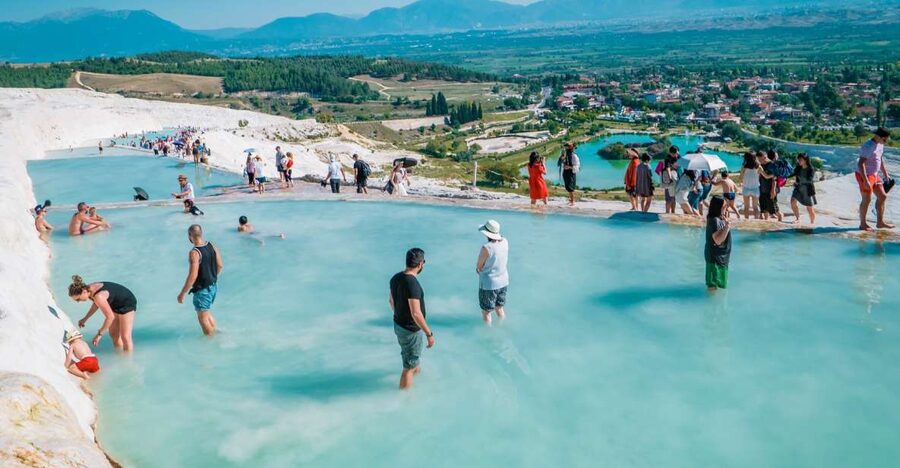
Antalya to Pamukkale is about 235 km, so yes, it is a full-day commitment. The upside is that the distance gives you a proper day trip feel, not a quick in-and-out photo stop. You’ll start early, and you should expect a long road to reach Denizli Province, then a packed sightseeing schedule after you arrive.
If you’re coming from Antalya’s port area, Konyaaltı, or nearby hotels, the hotel pickup makes the start easier. This tour is designed for convenience: you get picked up, you get dropped back at Antalya or Konyaaltı, and you do not have to think about transportation once the day begins.
Bring your patience, then use the guide for entertainment. When the guide is strong, the drive becomes less of a chore and more of a warm-up story for what you’ll see later. Several guides linked to this itinerary are praised for making the history feel practical and clear, not like a lecture you have to endure.
White limestone pools, worth the drive
- From Antalya/Kemer: Pamukkale & Hierapolis Day Trip w/Meals★ 4.5 · 2,196 reviews
- Pamukkale Hierapolis and Cleopatra’s Pool Tour with lunch from Antalya★ 5.0 · 2,188 reviews
- From Antalya/Kemer: Pamukkale and Hierapolis Tour with Lunch★ 4.6 · 1,853 reviews
Pamukkale terraces, how to enjoy the cotton castle without rushing
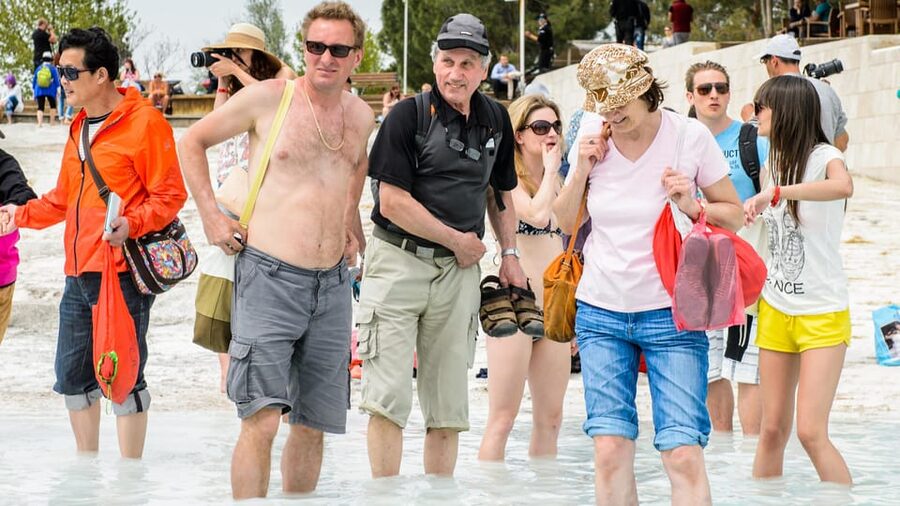
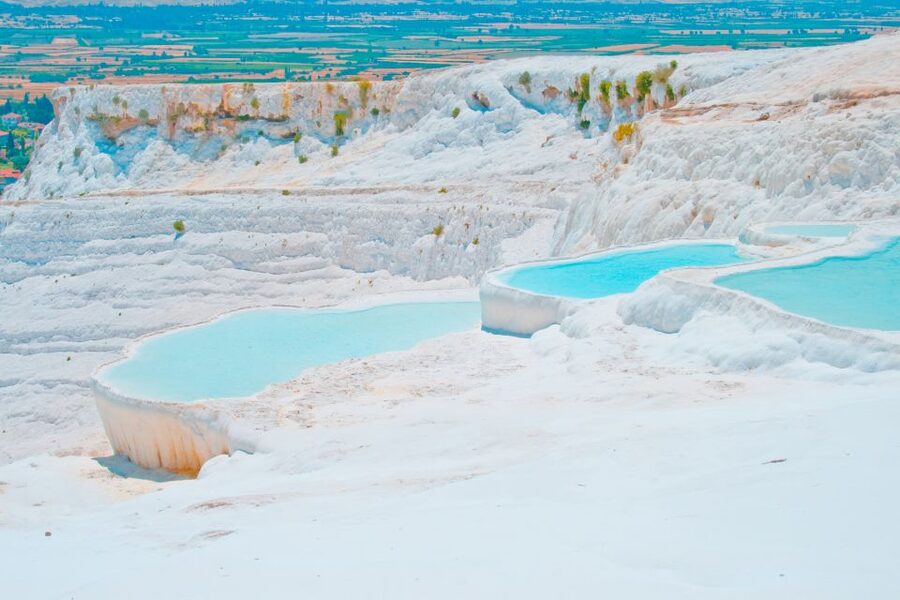
Pamukkale means cotton castle, and that nickname is earned. The travertine terraces look like cascading white steps, and they’re the main reason this region is famous worldwide. On this tour, you’ll get a photo stop and guided time to walk around the travertines, with breaks that let you take in the details rather than sprint between viewpoints.
Here’s the key to enjoying Pamukkale: walk slowly and plan your photos so you’re not constantly backtracking. The terraces are not a flat walkway, so comfortable shoes matter more than you might expect. You’ll want sunglasses and a sun hat because the whiteness reflects light hard, especially when the day is bright.
You also get the benefit of having a guide explain what you’re looking at. Even if you know Pamukkale is thermal, it’s helpful to understand that it’s part of a much bigger thermal system, not just one pretty spot. The region includes 17 hot springs, and that helps you make sense of why the terraces and pools feel like they belong together.
Thermal pools at Pamukkale, what “30 C” means for your body
The highlight here is the thermal water experience. The water temperature is around 30 C, and that warm range is usually more comfortable than people expect, especially when you’re walking and then stopping to rest your legs.
You’ll have guided time at the Pamukkale Hot Springs area, plus additional walking time. That structure matters because it gives you options: you can do a quick look if you’re tired, or you can linger and soak your feet when your energy is higher. The tour also notes that the available small thermal pools can vary with weather conditions.
A practical tip: pack your day like you’re doing both hiking and relaxation. Use your swimwear, bring a towel, and think about quick changes. Warm water feels great, but you still want to protect yourself after you rinse off and dry.
And yes, the legend is part of the story here. Locals associate the thermal waters with healing for digestion, circulation, skin conditions, and more. I take legends as a cultural layer, not a medical plan, but it’s still interesting to hear how people have interpreted this place for centuries.
The UNESCO day trip rhythm: from Pamukkale into Hierapolis

Once you finish the travertine time, you move into the neighboring ancient spa town of Hierapolis. Hierapolis literally connects to the idea of being a holy city, and it grew right beside Pamukkale’s hot springs, which is why these two places feel linked even before you understand the details.
The tour layout supports that “paired experience” idea. You’re not just dropped at one ruin field. You visit key areas in a logical flow: main streets and monuments in Hierapolis, then specific stops such as the Temple of Apollon and the Hierapolis Gate of Domitian.
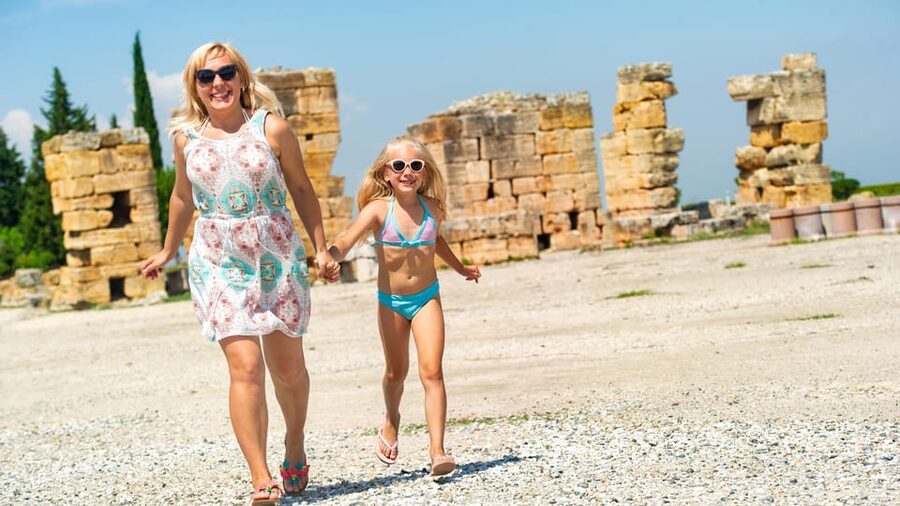
Hierapolis is huge on foot. It stretches roughly 2.7 km long and 0.6 km wide in the area you’ll explore, with a sense of elevation that makes the ruins feel dramatic even when you’re not chasing panoramic views. With a guide, you get help spotting what matters, like the way Roman and Greek eras overlap in the architecture and urban layout.
If you care about ancient design, this part of the day is the “aha” moment. It’s easy to treat Pamukkale like a nature attraction, but Hierapolis turns the trip into a real history walk.
Hierapolis ruins and Necropolis, where the story gets bigger
One of the strongest parts of the tour is the guided exploration of Hierapolis plus the Necropolis of Hierapolis. Necropolis sounds intimidating, but it’s really a way to understand how this city functioned around life and death, family and status, and long-term use of sacred space.
The itinerary includes guided sightseeing with stops designed for wandering: photo stops, guided time, and walks. That helps you slow down in the right places. The ancient city’s gates and major structures give you natural anchors for your photos, then the guide fills in the context so you understand why a gate matters and what the monument was likely used for.
You’ll also have time around the Hierapolis museum area mentioned in the broader tour context. The museum is known for artifacts tied to the city and surrounding ancient towns, plus indoor sections relating to the Hierapolis Bath. Even when you don’t spend all day inside, a guide pointing out the most important themes helps you recognize what you’re seeing outside.
If you’re someone who likes to connect names and dates, the guide will likely bring up the political shift that sent Hierapolis into Roman control after the kingdom was surrendered. That kind of “why it changed” explanation is often what turns a ruin visit into something you remember.
More heat, mineral water this time
- Antalya Pamukkale Hot Springs & Hierapolis Tour With Lunch
★ 5.0 · 1,092 reviews - Antalya: Spa and Skin Care Experience with Massage and Drink
★ 4.8 · 628 reviews - Traditional Turkish Bath & Spa Experience in Antalya
★ 3.9 · 418 reviews - Antalya / Lara : Traditional Turkish Bath & Oil Massage & Spa
★ 4.5 · 90 reviews - Antalya: Ladies Turkish Bath Hamam – Wellness Spa Center
★ 4.2 · 40 reviews
Temple of Apollon and the Gate of Domitian, making sense of the big stone
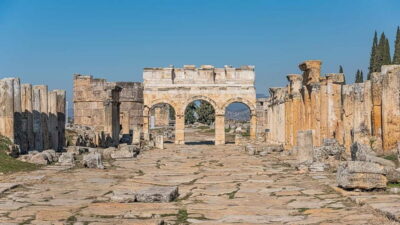
Two stops that are worth your attention are the Temple of Apollon in Pamukkale and the Hierapolis Gate of Domitian. These are the types of landmarks that can look similar in photos if you’re not sure what each one represents.
With a guide, you’ll connect the dots. Apollon is tied to a major religious tradition, and the gate connects to the city’s Roman identity and civic structure. Even if you’re not a stone-detective, knowing what each monument likely signaled in daily life makes the ruins feel less random.
This is also where good footwear pays off. You’ll do more walking than you might expect for a “hot spring day trip,” and some parts involve uneven ground. Comfortable shoes prevent the day from turning into a foot-soreness contest.
Cleopatra’s Antique Pool, columns, closures, and your best plan B
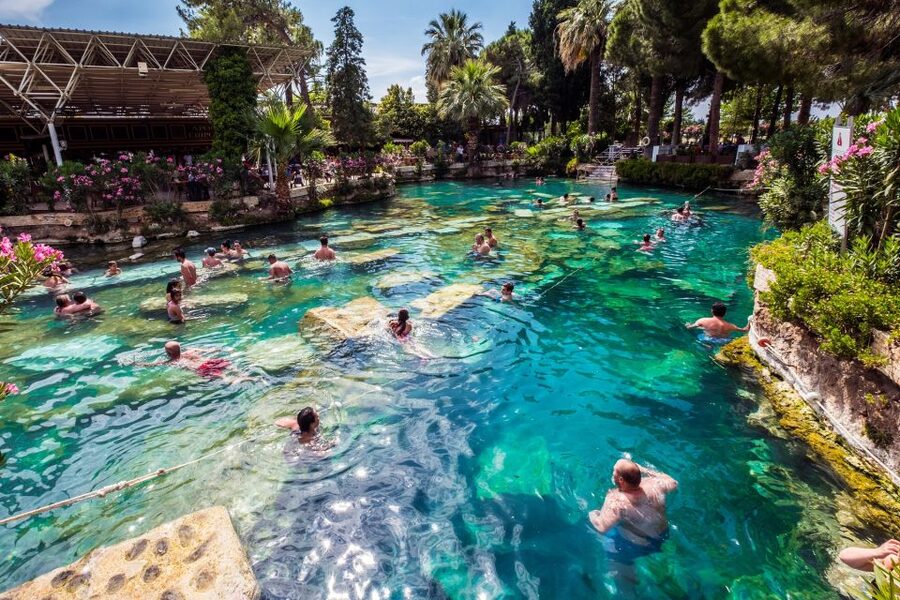
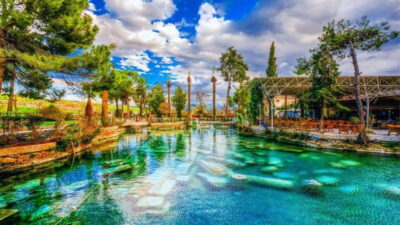
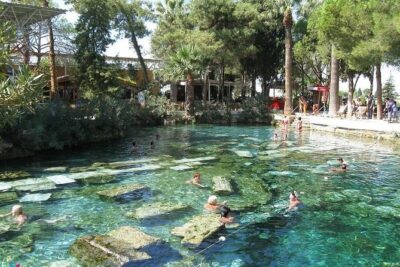
The Cleopatra pool is famous for a reason: it is an artificial pool built on top of ancient columns that fell during an earthquake. This matters because it turns swimming into more than a water break. When it’s accessible, the pool gives you a chance to see ruins in a way that feels immediate, like you’re in the same space those stones occupied.
Here’s the reality check. The tour information says Cleopatra’s Pool is temporarily closed for renovations, and access to the pool area is not available at this time. That means the “swim optional” highlight might not happen on your exact day.
Some people value this stop mainly for the photo and the story, and others planned the day specifically for swimming. If you fall into the second group, treat this tour as a strong Hierapolis and Pamukkale day trip first, with Cleopatra pool as a bonus if conditions allow later.
Also watch for timing and rules. If you end up with access, some participants have reported a separate fee for swimming at Cleopatra pools. So it’s smart to assume you might need extra spending beyond the ticket entry fees.
Lunch in Pamukkale, what you’ll actually want to eat after walking
Lunch is included, and it’s one of the practical reasons this tour feels like good value. A buffet lunch with multiple choices is reported, and there’s at least a vegetarian option. After hours of walking across terraces and ruins, you’ll appreciate being fed without hunting for a restaurant in a tourist hub.
The lunch timing comes mid-day, which works well because you’re shifting from morning sightseeing energy into afternoon wandering. If you’re sensitive to heat, eat earlier when you can and drink water steadily.
Bring your own water habits too. Even with lunch included, you’ll likely want drinks you don’t have included in the tour price, since drinks are not included. A sun hat and sunglasses help in the morning, but hydration matters more than style.
Price and entrance fees, where the real math lands

The headline price is $50 per person, with hotel pickup and drop-off and lunch included. That already covers the big operational costs that can make DIY trips annoying. But there is an important add-on: the entrance fee for Pamukkale and Hierapolis is not included, listed as €30.
So the honest budget picture is: tour price plus site entrance, plus drinks. If Cleopatra pool swimming is available, you might also see extra costs for swimming access. One participant even noted additional spending related to swimming, though fees can vary by period and rules.
Is it still worth it? Often, yes, because you’re paying for more than a bus ride. You’re paying for an organized pacing plan, the value of an English guide, and the structure that helps you hit multiple monuments without wasting time figuring it out yourself. The skip-the-ticket-line note also helps you reduce waiting when you arrive.
What to pack for Pamukkale and Hierapolis (so the day stays fun)
Plan like you’re combining walking, sun exposure, and occasional water time. The tour’s suggested packing list is spot on for most people.
Bring:
- Comfortable shoes
- Sunglasses and a sun hat
- Swimwear, towel
- Camera
- A T-shirt
If you tend to get cold after swimming, bring a light layer for the walk back to the car, especially if weather changes. The thermal areas are warm, but the transition from water to sun can feel cooler than you expect.
Who this Pamukkale and Hierapolis day trip is best for
This is a strong choice if you want one organized day that covers the big hits: Pamukkale terraces, Hierapolis ruins, the Necropolis, and key monuments like the Temple of Apollon and Gate of Domitian.
It’s also a good fit for first-timers to Turkey’s Aegean coast who feel overwhelmed by planning. You get a bilingual guide experience in English, plus pickup and drop-off. You can focus on seeing and learning instead of scheduling.
If you’re the kind of traveler who hates long drives, keep that in mind. This is a full 12-hour day, and the road time is real. The long drive is often described as worth it, but you have to decide if that tradeoff fits your energy level.
It’s less ideal if swimming at Cleopatra’s pool is your top priority, since the pool area can be closed for renovations at times.
Should you book this Antalya to Pamukkale small group tour?
I’d book it if you want a guided, structured day that hits Pamukkale and Hierapolis in one go, with lunch included and a guide who helps you understand what you’re walking past. The best reason to choose it is the combination: dramatic thermal landscapes plus ancient ruins that make more sense when someone explains them clearly.
I would think twice if you’re traveling only for Cleopatra’s Pool swimming. With the pool currently marked as closed for renovations, your day will still be worthwhile for terraces, thermal areas, Hierapolis monuments, and the Necropolis, but the Cleopatra experience might not match what you pictured.
If you’re flexible and want a classic Turkey bucket-list day trip from Antalya, this one is a solid bet, especially given the strong guide feedback and the practical lunch setup.
FAQ
How long is the Antalya to Pamukkale and Hierapolis tour?
The tour lasts 12 hours.
Where do you get picked up and dropped off?
Pickup and drop-off are available from hotels in Antalya, Konyaaltı, and you return to the same two options.
Is lunch included?
Yes, lunch is included in the tour price.
Do I need to pay entrance fees?
Yes. Entrance fees for Pamukkale and Hierapolis are not included, and they are listed as €30.
Are drinks included with lunch?
No. Drinks are not included.
Can I swim in the thermal pools or Cleopatra’s Pool?
Swimming is optional in the thermal pools, and swimming at Cleopatra’s Antique Pool is described as an optional highlight. However, the tour information also states Cleopatra’s Pool is temporarily closed for renovations, so access may not be available.
What is the temperature of the thermal water?
The thermal water is listed as about 30 degrees Celsius.
What should I bring with me?
You should bring comfortable shoes, sunglasses, a sun hat, swimwear, a towel, a camera, and a T-shirt.
How far is Pamukkale from Antalya?
Pamukkale is around 235 km from Antalya, so expect a long drive.
Just landed on the site




Pamukkale Excursions, compared.
Pamukkale Hierapolis and Cleopatra’s Pool Tour with lunch from Antalya
Read our review →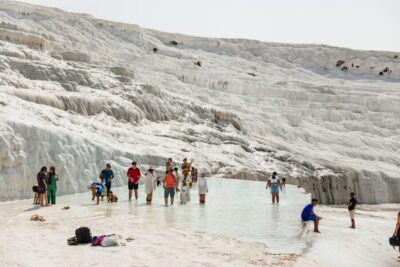

Antalya Pamukkale Hot Springs & Hierapolis Tour With Lunch
Read our review →
Full-Day Tour of Pamukkale from Antalya with Lunch
Read our review →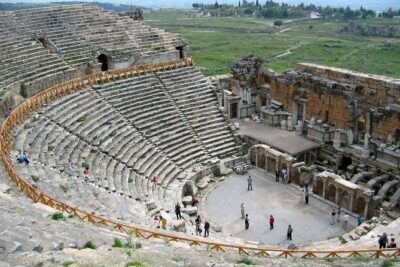

More of this kind of Antalya day